
filed under
What Is an Heirloom Portrait? A Guide to Timeless Children’s Portraits
September 14, 2026
POSTED

If you’ve spent any time looking at children’s photography lately, you’ve probably come across the term heirloom portrait. This classic style of portraiture is having a bit of a renaissance – and for good reason!
So what exactly is an heirloom portrait?
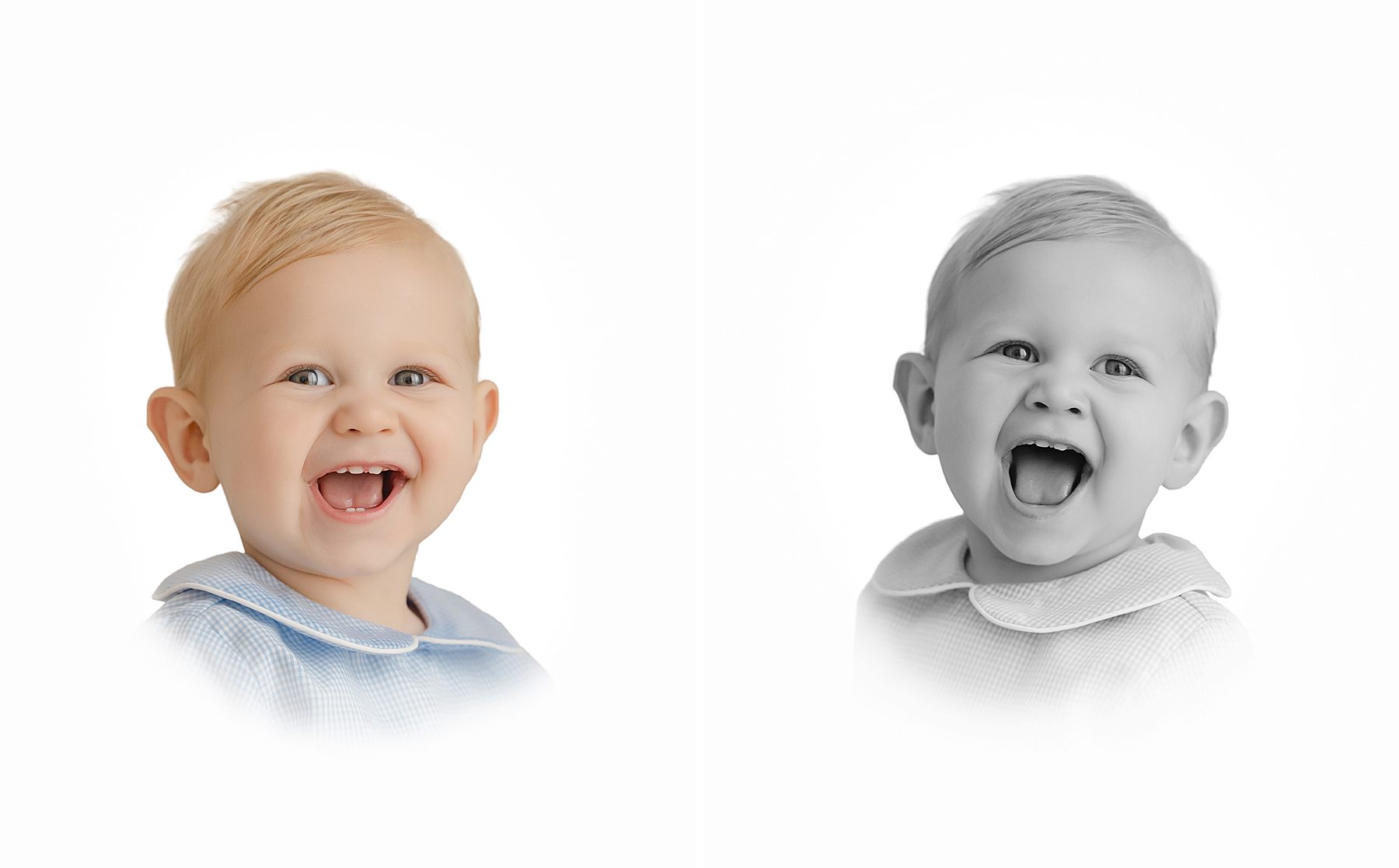
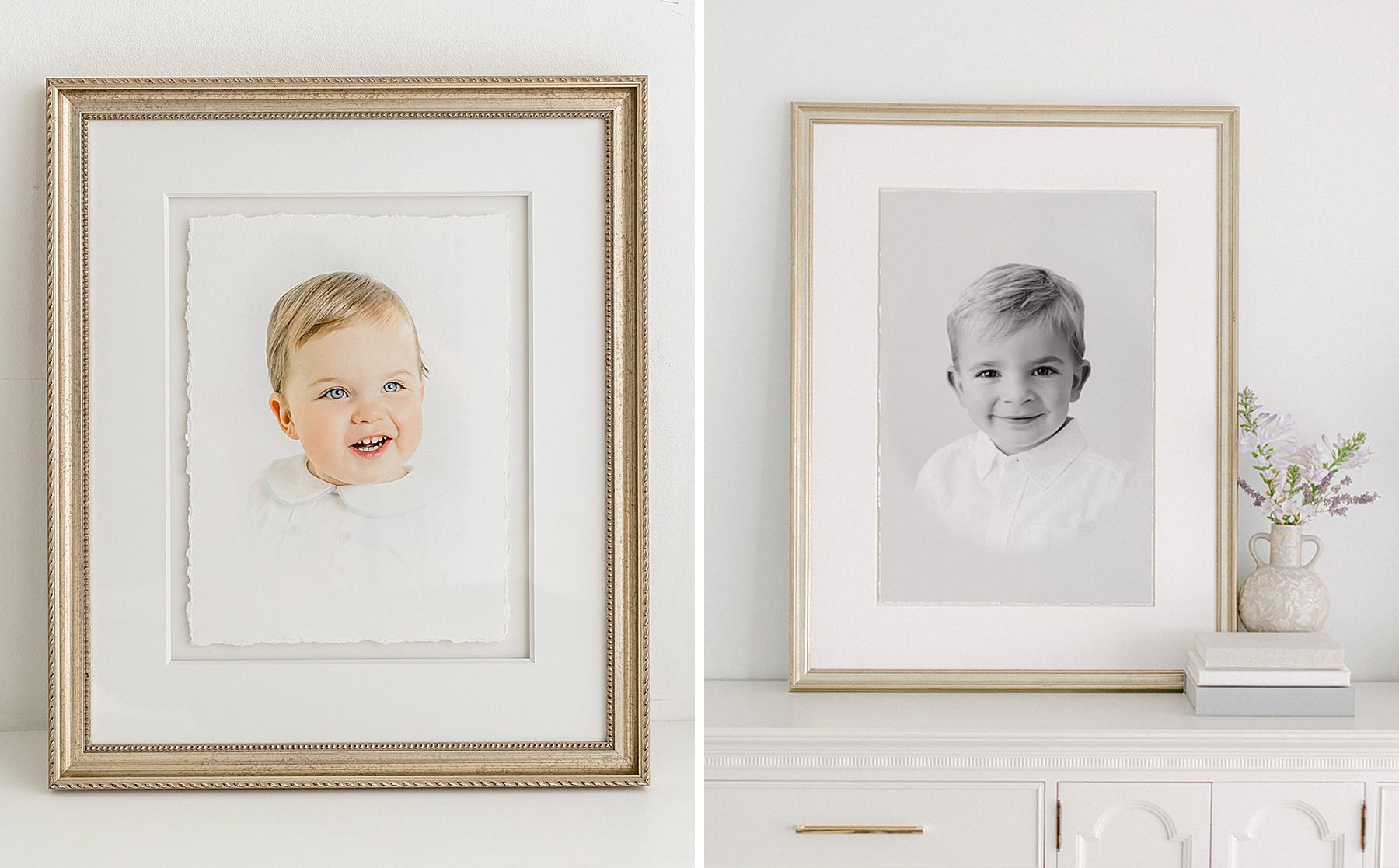
An heirloom portrait is a simple, classic portrait of a child created with longevity in mind. Typically photographed against a clean, neutral background with minimal styling and beautiful light, the focus is entirely on the child: their face, their expression, and all those little details that make them who they are at this particular age.
But the word heirloom describes more than the style of the photograph.
These portraits are intended to become finished pieces of artwork – beautifully framed and displayed in your home now, and eventually passed down through your family.
In other words, an heirloom portrait isn’t designed around what’s trending this year.
It’s designed to still belong on the wall twenty years from now.
What makes an heirloom portrait different from other children’s portraits?
The simplicity is intentional.
There are no elaborate sets or props competing for your attention. No seasonal theme that tells you immediately what year the photograph was made. Clothing tends to be classic and understated. The background disappears. The light is soft and beautiful.
The focus is solely and simply on one thing: your child.
That restraint is what gives heirloom portraits their timeless quality. A photograph filled with trends tells you something about the year it was taken. A portrait of a face tells you about a person.
And as a photographer, that’s the part that interests me most.
I’m looking for more than a technically perfect smile. I’m watching for the raised eyebrow, the quiet little grin, the expression you see across the breakfast table every morning. The things that make you look at a photograph and immediately say, Oh, that is so her.
Because twenty years from now, that’s what you’ll want to remember.
Who are heirloom portraits for?
Heirloom portraits can be created throughout childhood.
In my Wake Forest studio, I photograph children for Heirloom Portrait Sessions beginning when they can sit independently and continuing through age twelve.
Babies and toddlers are certainly beautiful photographed this way. Round cheeks, wispy curls, tiny teeth and sweet little collars lend themselves naturally to the classic style.
But heirloom portraits don’t have to end when the baby years do.
In fact, one of the things I love most about this kind of portraiture is the way it changes as your child grows.
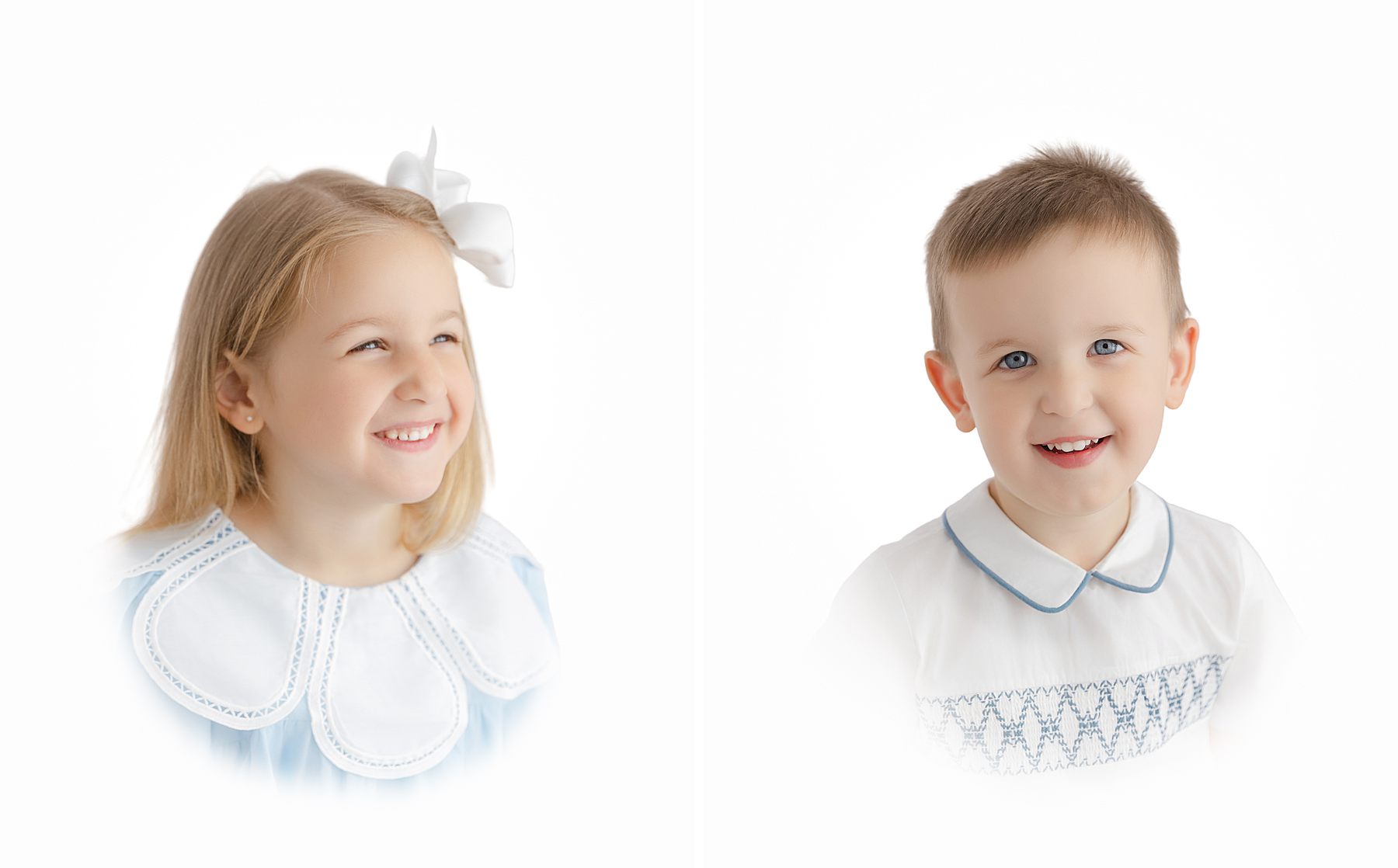
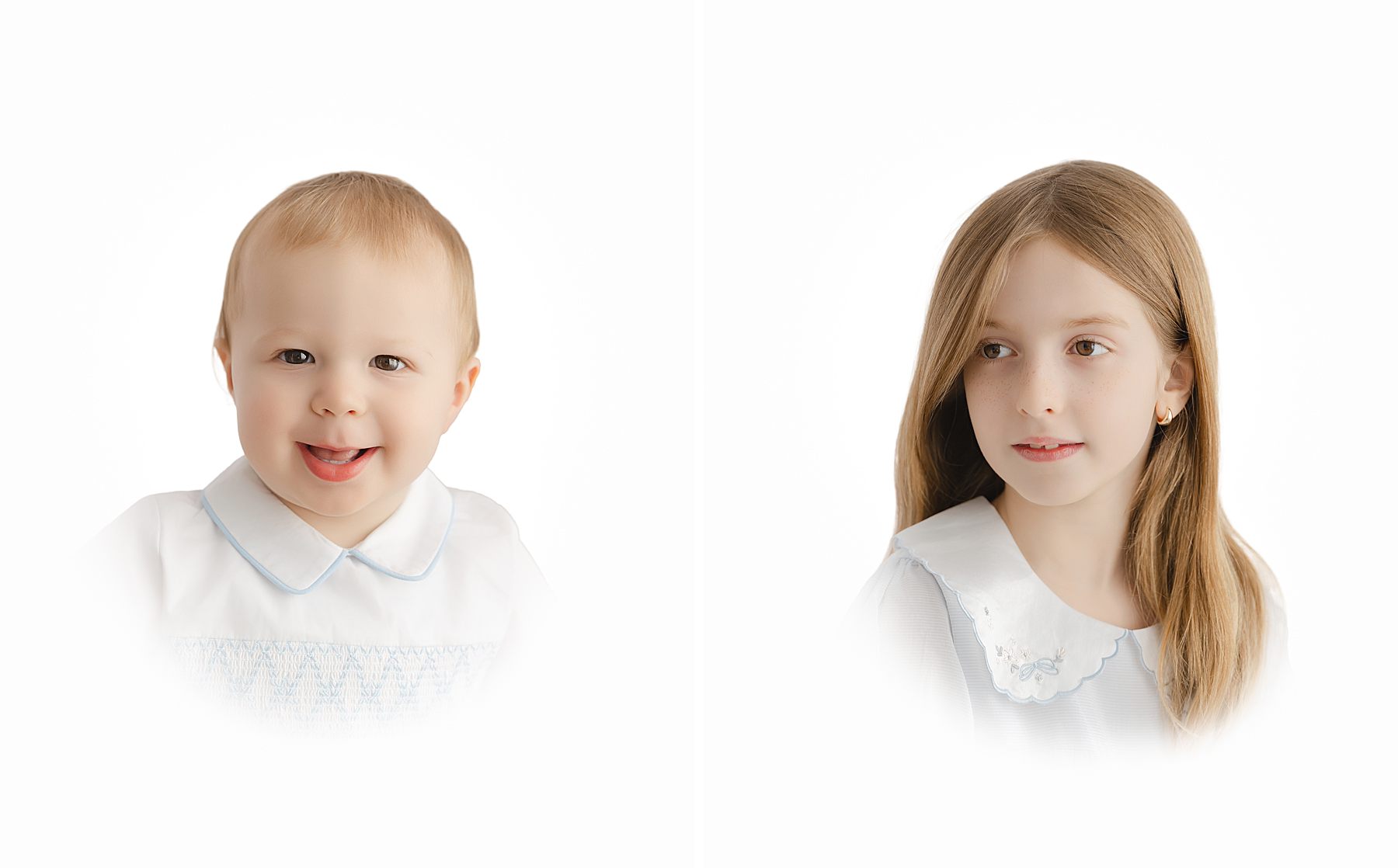
A one-year-old and an eight-year-old bring completely different things to the camera, and both are worth preserving.
Are heirloom portraits just for babies and toddlers?
Not at all.
Older children bring something to a portrait that babies simply can’t yet: a growing sense of who they are.
Their expressions become more distinctly theirs. A six-year-old might give me the mischievous sideways smile his mother knows instantly. A nine-year-old has opinions and interests and a wonderfully specific way of moving through the world. By eleven or twelve, you can sometimes catch glimpses of the teenager – and even the adult – they’re becoming.
There is something especially fascinating about those in-between years.
The missing teeth. The freckles. The hair that suddenly got darker. The face that still looks completely like your little kid until, every once in a while, it doesn’t.
The portrait changes because the child changes.
An heirloom portrait at one isn’t a substitute for an heirloom portrait at eight. They’re different chapters of the same story.
What happens during an heirloom portrait session?
Heirloom Portrait Sessions take place in my natural-light photography studio in Wake Forest, just north of Raleigh.
The sessions themselves are intentionally simple and relaxed. Each session is designed for one child and generally lasts 10-15 minutes, though I reserve up to 30 minutes for them, giving us plenty of time to let your child settle in without asking them to perform for the camera for longer than they reasonably want to.
And I follow their lead.
Some children walk into the studio ready to tell me everything they know before I’ve even picked up my camera. Others need a few minutes to look around and decide what they think of me first.
Both are perfectly fine.
My job isn’t to manufacture the same expression from every child who sits in front of my camera. It’s to pay attention long enough to find the expressions that belong to yours.
The result is a small collection of portraits that feel polished and timeless – but still unmistakably like your child.
What should my child wear for an heirloom portrait?
Keep it simple.
Classic clothing photographs beautifully for heirloom portraits because it supports the timelessness of the finished image rather than becoming the subject of it.
For babies and younger children, that might mean a delicate collar, smocking, subtle embroidery or a simple dress or romper. Older children might wear a classic collared shirt, a beautiful solid knit or a simple blouse or dress.
Soft, muted colors work especially well. I generally recommend avoiding large logos, characters, neon colors and anything especially trend-driven.
But “heirloom” doesn’t mean your child has to look like they stepped out of another century.
The goal is still for them to look like themselves.
If your eight-year-old would be deeply offended by a Peter Pan collar, we are not putting your eight-year-old in a Peter Pan collar. Promise.
I’ll help you choose something that feels appropriate for the style of the portrait and for the child wearing it.
Are heirloom portraits black and white or color?
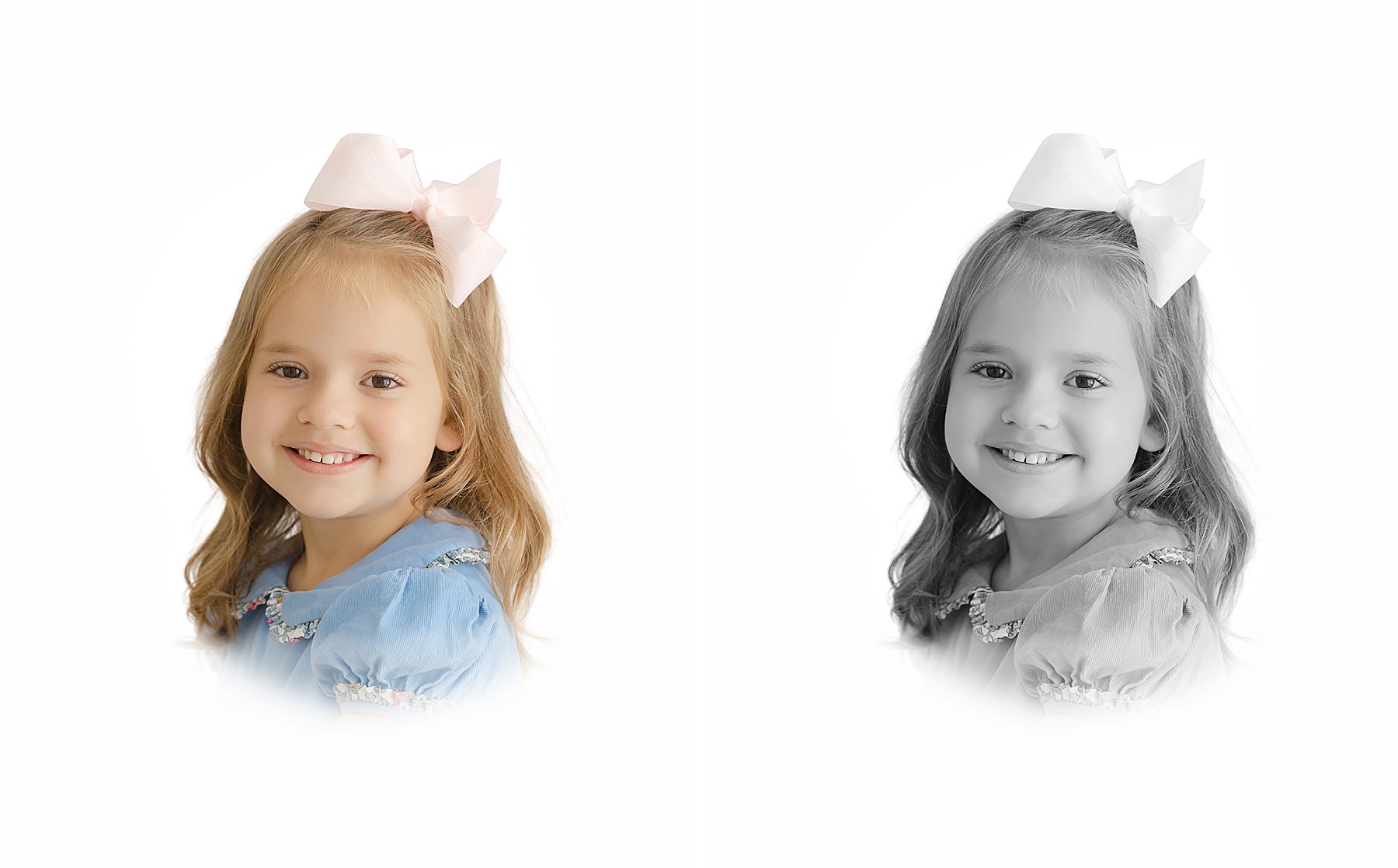
Black and white is strongly associated with traditional heirloom portraiture, and it’s easy to understand why. Removing color makes an already simple portrait even more distilled. You notice light, expression and all the tiny contours of a child’s face.
But color can be just as meaningful.
The exact shade of their hair. Their rosy cheeks. Those blue or brown or green eyes you know by heart.
Those details are part of the memory, too.
What makes an heirloom portrait an heirloom?
This may be the most important part.
The word heirloom doesn’t simply describe the way these photographs look. It describes what they’re meant to become.
An heirloom is something made well enough – and loved enough – to keep for generations.
These portraits aren’t created primarily to become another image buried in a camera roll. They’re created with the finished piece in mind: a beautifully printed portrait that becomes part of your home now and part of your family’s history later.
I love thinking about where a photograph goes after I make it.
First it might hang in your hallway or sit on a dresser. Years from now, perhaps your child takes it to their own home.
And someday, someone who wasn’t even born when we made it may hold it and recognize a familiar expression.
That possibility changes what the photograph is for.
How are heirloom portraits different from school pictures?
School pictures and heirloom portraits both document a child at a particular age, but they serve different purposes.
A school photograph is wonderful for what it is: a record of a year. New teacher, new grade, new haircut, maybe a few more missing teeth than last September.
An heirloom portrait is slower and more intentional.
I have time to get to know your child a little. To let the initial camera-face disappear. To notice the small expressions and gestures that are actually theirs.
The lighting, styling, editing and finished artwork are all considered for one particular child rather than a whole class of them.
One is documentation; the other is a portrait.
Is there a best age for heirloom portraits?
There really isn’t.
Once a baby is sitting independently, every stage of childhood brings something different to an heirloom portrait.
You may choose to have one made to mark a particular age or milestone. You might make portraits of each of your children at approximately the same age and display them together. Or heirloom portraiture can become a tradition you return to periodically as your children grow.
I especially love that last idea.
The portraits don’t need to match perfectly from year to year. Your children certainly won’t. And that’s the point.
A toddler’s round face becomes a little kid’s grin. The little kid becomes long-legged and toothless. Eventually those permanent teeth come in and their face changes and matures.
There is no single age that represents childhood. They’re all part of it.
Frequently Asked Questions About Heirloom Portraits
What is an heirloom portrait?
An heirloom portrait is a simple, timeless portrait of a child created to become finished artwork that can be displayed and eventually passed down through a family. The style typically uses a clean background, classic clothing, beautiful light and minimal props so the focus remains on the child.
What age is best for heirloom portraits?
There is no single best age. At Christy Johnson Photography, Heirloom Portrait Sessions are available from sitting age through age twelve. Babies, toddlers and older children each bring something different to this classic style of portraiture.
Can older children have heirloom portraits made?
Absolutely. Heirloom portraits are beautiful for school-age children and tweens, whose growing personalities and more nuanced expressions can make especially meaningful portraits.
What should a child wear for an heirloom portrait?
Simple, classic clothing in soft or muted colors generally photographs best. Subtle collars, embroidery, smocking, solid knits and simple dresses or shirts all work beautifully. Avoid large patterns, logos, characters and highly trendy pieces that may distract from your child.
Where can I have heirloom portraits made near Raleigh, NC?
I photograph Heirloom Portrait Sessions at my Wake Forest photography studio, convenient to Raleigh and families throughout the Triangle. Sessions are available by reservation for children from sitting age through twelve.
You can explore Heirloom Portrait Sessions or get in touch to receive my complete Heirloom Portrait Welcome Guide with pricing and availability.
Christy Johnson Photography is located in Wake Forest, NC, and serves families throughout Raleigh, Wake Forest, Durham, Cary and the surrounding Triangle.

Hi, I’m Christy. For more than 17 years, I’ve photographed the fleeting seasons of pregnancy, newborn days, and baby’s first year for families throughout Raleigh, Wake Forest, and the surrounding Triangle area. My work is known for its soft, light-filled style and relaxed approach, helping families preserve the first chapter of their baby’s story in a way that feels beautiful, meaningful, and true.


